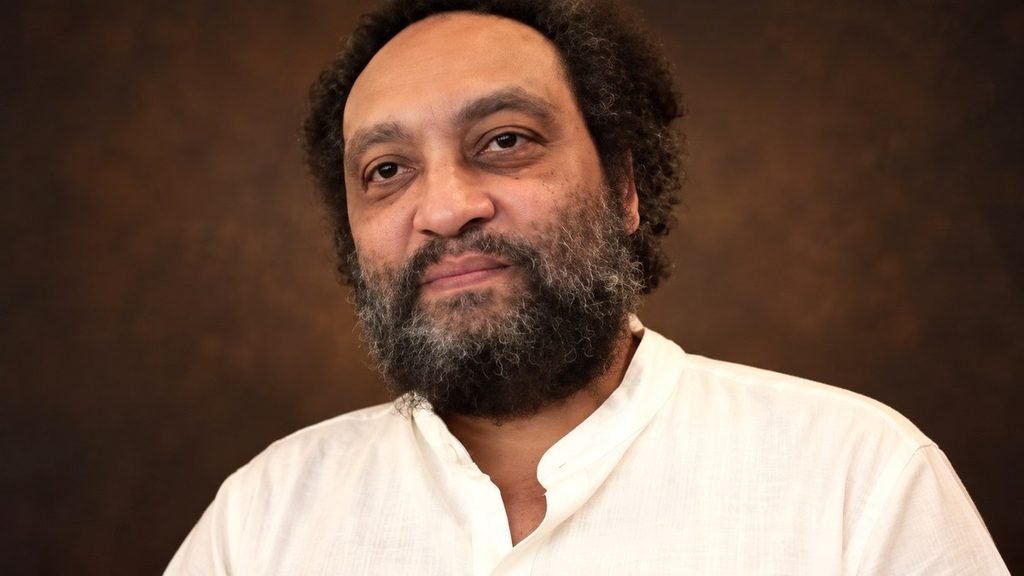
Africa has lost a journalist and intellectual whose life bridged Ghana and Egypt and whose work connected the continent’s political history with the wider conversations shaping its place in the world.
Gamal Gorkeh Nkrumah, the eldest of the three children of Ghana’s founding President, Osagyefo Dr Kwame Nkrumah, and his Egyptian wife, Fathia Nkrumah, died peacefully in Cairo on Wednesday, 14 October 2026, following a prolonged illness. He was 68. The Nkrumah family announced his passing in a statement issued through his sister, Samia Nkrumah, on 15 October.
His death is a moment of reflection for all who are committed to African intellectual life, independent journalism and the unfinished project of Pan-Africanism.
Born in Accra in 1958, the year after Ghana’s independence, Gamal grew up within one of Africa’s most consequential political legacies. His father led Ghana to independence in 1957 and became one of the foremost champions of continental unity. After the 1966 coup that removed Kwame Nkrumah from power, Fathia Nkrumah took the children to Cairo to be raised there, while their father lived in exile in Guinea.
Gamal’s own contribution, however, was made through journalism, political analysis and intellectual inquiry. He studied at the School of Oriental and African Studies (SOAS), University of London, where biographical accounts credit him with a doctorate in political science.
He built his career at Al-Ahram Weekly, the English-language newspaper published in Cairo, first as a political journalist and later as editor of its international affairs section. From that desk, he engaged for decades with African politics, world affairs and the relationship between Africa and the wider international system.
Gamal Nkrumah’s significance extended well beyond his family name. His professional life demonstrated the value of African journalists who interpret global developments through an informed understanding of the continent’s history, interests and aspirations.
Africa’s place in the world is too often explained through external assumptions, strategic interests and narratives that flatten the complexity of African societies. Journalists and intellectuals who interrogate those narratives help create the conditions for a more confident and better-informed African public discourse.
Born in West Africa and raised in North Africa, the son of a Ghanaian father and an Egyptian mother, he embodied the long-standing connections between the continent’s peoples and political traditions. Working from Cairo placed him at a meeting point of African and Arab intellectual life, and the relationship between African unity and international solidarity remained central to his outlook. In announcing his death, his family recalled his lifelong commitment to justice, human dignity, African unity and international solidarity, and noted that he honoured his father’s legacy while earning a reputation grounded in his own principles and work.
To remember Gamal Gorkeh Nkrumah is also to return to a question that has followed generations of African thinkers: what does Pan-Africanism mean in practice?
For his father’s generation, the struggle centred on political independence, liberation from colonial rule and the aspiration to unite African states around shared interests. Today the challenge extends to economic transformation, intellectual sovereignty, technological independence, democratic accountability and the capacity of African societies to define their own place in a changing world.
These ambitions cannot be sustained by declarations alone. They require strong institutions, credible scholarship, independent journalism and a public culture capable of engaging in difficult questions honestly.
The responsibility for carrying this tradition forward does not rest only with political leaders or with the descendants of prominent figures. It belongs to a new generation of African writers, researchers, journalists and citizens willing to examine the continent’s challenges with rigour and imagination.
Gamal Nkrumah’s passing invites us to consider the value of a life spent engaging seriously with the political and intellectual questions of its time. His story reminds us that legacy is not simply inherited; it is shaped by the work one undertakes, the questions one asks and the perspectives one contributes to public life.
For The African Renaissance Review, remembering African intellectuals is part of a wider commitment to preserving the continent’s intellectual heritage while encouraging new generations to think critically about Africa’s future.
May his life and work inspire renewed reflection on independent journalism, African unity and the importance of African voices in global affairs.
The African Renaissance Review extends its condolences to the Nkrumah family, his colleagues at Al-Ahram Weekly, and all who mourn his passing. The family has said memorial arrangements will be announced in due course and has asked for privacy as it grieves.
May his memory endure, and may the work of understanding and advancing Africa continue.