
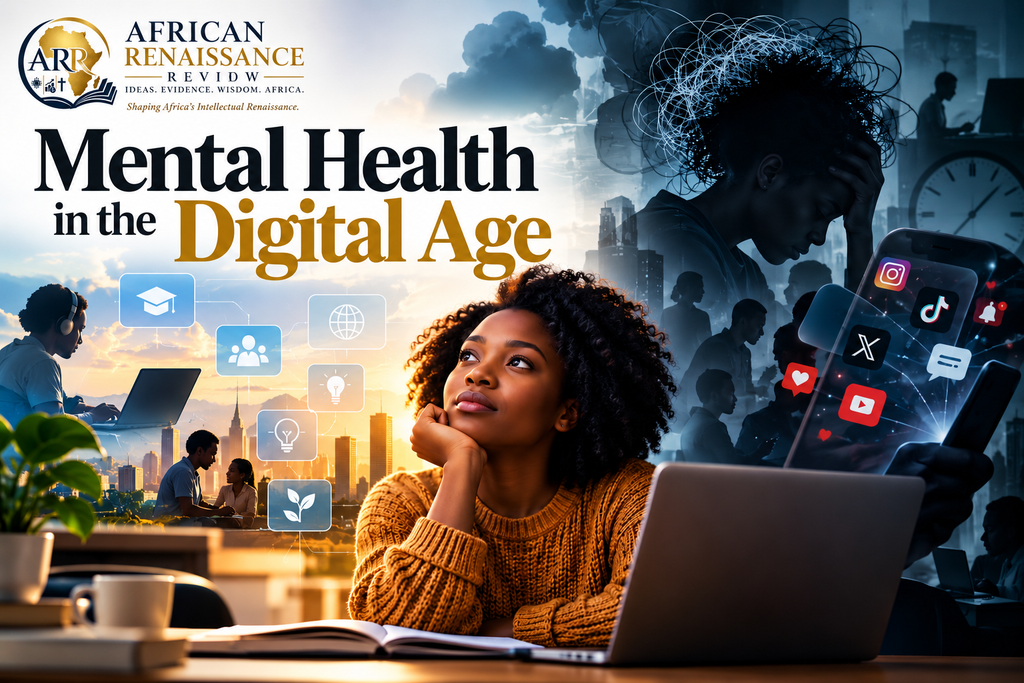
It is Tuesday night in Kabwata, and ZESCO has taken the power again. A young woman sits on the edge of her bed, phone propped against a candle, scrolling through other people’s weddings, holidays, and new cars as her street goes dark. Up in Ndola, a Grade 11 boy sits at the back of a kombi with his earphones in. He is supposed to be listening for his stop. He is actually deep in a class WhatsApp group that hasn’t gone quiet since six in the morning. Neither of them is really alone. Ask them, though, and both might tell you they are lonely.
Not so long ago, being alone meant being out of reach. No signal, no news, nobody to talk to until a neighbour passed by to greet you or a relative arrived unannounced from the village. Today, a person can sit alone in a room in Chelston, Kitwe, or Mongu and, within seconds, be surrounded by hundreds of conversations, photographs, opinions, arguments, adverts, and the carefully arranged lives of people they have never met.
We have never been more connected. And yet more and more people, here at home as much as anywhere, describe themselves as lonely. That contradiction is where any honest conversation about mental health in the digital age has to begin.
Technology has changed how we work, study, worship, argue, court, grieve and stay in touch with relatives scattered from Chipata to Johannesburg to Manchester. It has also changed something quieter: how we see ourselves, and how we measure our lives against everyone else’s.
Instead of asking whether screen time is inherently good or bad for mental well-being, we need a sharper, more practical question. What kind of digital environment are we shaping in Zambia today, and what impact is it having on the everyday lives of our people?
Let me start with what is good, because there is a lot of it. A student at UNZA or CBU who is struggling with anxiety, grief, a break-up or a disappointing result can look for information, find others going through the same thing, or reach someone who understands, sometimes at two in the morning when nobody at home is awake. A young mother in Kaputa or Solwezi, hours from the nearest psychologist, can at least in principle reach help through the phone tucked into her chitenge.
Online spaces can also ease isolation rather than deepen it. A young person who feels misunderstood at home or at school may find friendship, identity and a sense of belonging in an online community that their immediate surroundings have not given them. The American Psychological Association makes the same point: social media can offer real social connection and, for some young people, real psychological benefit. It is careful not to call social media inherently harmful or inherently good. The effect depends on the person, the content and how the platform is used.
That point deserves more weight than it usually gets. The phone is not the enemy. The trouble starts when it begins to set the terms for how we sleep, think, relate to one another and judge our own worth.
From Connection to Comparison: The Social Media Trap
If I had to name the single most damaging habit social media encourages, it would be comparison. People have always measured themselves against others; that part is not new. What has changed is the scale. We used to compare ourselves with the people on our street, in our congregation or at work. Now we do it every single day against thousands of lives that have been edited before they reach us.
Think of what passes across a typical Zambian feed in one evening. A former classmate posting from Dubai. A kitchen party where the gifts arrived by the carload. A new house in Ibex Hill, captioned simply “God did it.” A couple whose Matebeto looked like a film set. An agemate posing next to a new Prado, a business contact who seems to close a deal every week, and a family whose Sunday lunch photos suggest they have never disagreed in their lives.
None of these posts is necessarily false. But none of them is the whole story. They are selections, chosen and lit for effect. Meanwhile, the person scrolling is setting their own unfiltered life, the school fees still owing, the chilimba that collapsed, and the job application that never got a reply, against somebody else’s highlight reel. Over time, that quietly wears down self-esteem, body image and a person’s sense of whether they are doing well enough. The American Psychological Association (APA) has specifically flagged appearance-focused content as a risk to adolescents’ mental health, and for young people still working out who they are, that matters a great deal.
Adolescence in the Digital Era
Our children are growing up in an environment no generation before them has had to navigate. For many young Zambians, the smartphone is not just for calling home. It is a classroom, a cinema, a social life, a news source, a market, a camera, a diary and a window onto the rest of the world, all in one hand, and usually running on a bundle bought that morning.
That brings real opportunity and real vulnerability. In 2024, the WHO Regional Office for Europe reported that problematic social media use among adolescents rose from 7% in 2018 to 11% in 2022, based on a study of almost 280,000 young people across 44 countries. The same study found that a meaningful minority of teenagers were at risk of problematic gaming. Those figures are European, but the platforms are the same ones our children use. And closer to home, there is something the European data doesn’t capture: the betting apps advertised on billboards and during every football broadcast, now sitting on the phones of young people, some of them not old enough to be using them at all.
None of this proves that social media causes mental illness on its own. The science is more complicated than that. WHO’s own policy work describes the relationship as running in both directions: a young person who is already struggling may use technology differently, and certain patterns of use can then make those struggles worse. Home life, personal circumstances and the type of activity all play a part.
Correlation is not causation, and that is worth remembering. But complexity is no excuse to look away. ZICTA’s 2025 market report recorded a double-digit rise in Zambia’s internet subscriptions in a single year. Our young people are moving deeper into the same digital environment the rest of the world is still trying to understand, and they are doing it faster than our schools, churches and families are adjusting.
There is another part of this conversation that rarely gets enough attention: how these platforms are built. Almost every digital service is competing for the same thing, our attention, and they employ some of the best engineers and behavioural scientists in the world to hold onto it.
A notification interrupts you mid-thought. A video starts playing before you have decided whether you want it. A feed refreshes before you have finished reading. An algorithm chooses what you see next, and it is very good at guessing what will keep you there a little longer. Likes, comments and shares feel like approval because they were designed to. Anyone who has watched a young man check his betting slip every ten minutes during a Chipolopolo match knows how well this works.
The result is an environment where putting the phone down takes real effort. Not weakness. Effort. The APA has singled out likes, recommended content, endless scrolling and notifications as design features that deserve scrutiny when we think about how adolescents develop.
If a platform is deliberately built to keep you on it for as long as possible, whose job is it to protect your ability to log off? At that point we are no longer talking only about individual willpower. We are talking about design, corporate responsibility, regulation and public policy, and Zambia, like every connected country, will have to answer that question for itself. We have made a start on the protection side with the Data Protection Act of 2021 and the cybersecurity and cybercrime laws enacted in 2025. Wellbeing online, especially children’s wellbeing, deserves the same seriousness.
Understanding Zambia’s Digital Landscape
None of this is abstract for us anymore. The smartphone has become part of ordinary Zambian life faster than most of us expected. It is how we do school, run a kantemba or sell on Facebook Marketplace, send money through Airtel Money or MTN MoMo, follow the news, organise the church choir, collect funeral contributions and keep the family updated when someone is unwell in the village. It has become an all-in-one vault for daily life. ZICTA’s latest figures show mobile and internet subscriptions climbing steadily, with data becoming more affordable as operators compete for customers. More Zambians than ever are spending more of their day looking at a screen.
There is already evidence that this can work in our favour. In 2025, UNICEF Zambia reported that its U-Report platform had launched a mental health chatbot offering adolescents confidential, youth-friendly support through SMS and WhatsApp. The choice of channel was a wise one. WhatsApp and SMS are where Zambians already are; they carry the family groups, the church announcements and the burial-society reminders. Help placed there doesn’t need to be downloaded or explained.
That is the principle worth holding onto. The same technology that creates psychological risk can also carry psychological support. Whether Zambia embraces digital technology is no longer a live question; millions of ordinary people settled it the day they bought their first smartphone. The real question is how we make that technology work for the wellbeing of the people using it.
Connected Yet Isolated: The Paradox of Online Life
The digital age forces us to confront a fundamental truth: communicating with someone isn’t the same as truly connecting with them. We can text, comment, and react all day long, but none of it guarantees the kind of genuine human connection we actually crave.
You can receive a hundred messages in the family WhatsApp group and still feel completely alone. You can have thousands of followers and nobody to call at eleven at night when things fall apart. You can spend hours typing to people online and never feel the warmth of sitting across a table from someone who actually knows you.
We need more than information passing between us. We need belonging, the kind that shows up in person: at a funeral house where people sit with the bereaved family for days, at a wedding, in a kitchen full of aunties, outside church after the Sunday service. We need touch, conversation, community and a real part to play in other people’s lives, not just a notification that someone thought of us. Zambian culture has always understood this. It is why we visit the sick, why we travel to the village for a burial, why “I’ll pass by” still means something. Digital communication can add to those relationships. It was never designed to replace them, and it can’t. This is part of why WHO and others now treat the digital environment as one piece of a much wider social picture that shapes mental health, rather than the whole of it.
The High Cost of Being Constantly Reachable
The digital age has also blurred a line that used to be clear: the line between work and rest. The office now follows people home in their pockets. School follows pupils into the evening through class WhatsApp groups and recorded lessons. The news never stops. Messages arrive at midnight. Social media never closes.
For many Zambian professionals, traders and young people, being permanently reachable has quietly become normal. The boss who sends a voice note at ten at night expects a reply before morning. The customer asking whether the order is ready doesn’t care that it is Sunday. In a tough economy, where many people are running a side hustle on top of a job, switching off can feel like a luxury, or even a risk. And there is a very Zambian irony here. Load-shedding has done what no wellness campaign managed: when the power goes out and the battery runs low, households end up talking to each other again by candlelight or torchlight, the way they did before there was a choice. Nobody would recommend it as policy. But it is a reminder that the human mind still needs quiet, and will take it wherever it can find it.
WHO’s research on adolescents links problematic social-media use to sleep problems and later bedtimes. The lesson is simple. A technology that is available twenty-four hours a day does not mean people are built to be available twenty-four hours a day.
The Rise of Mental Health Misinformation
The internet has given ordinary people something they never had before: direct access to mental-health information without having to book an appointment or explain themselves to anyone. That could be transformative in a country where admitting to anxiety or depression still carries stigma in many homes and some churches, and where a person who is struggling may be told to pray harder, to “man up”, or that someone has bewitched them. But it has also created a new problem. Everyone online can now sound like an expert.
A thirty-second TikTok clip can appear to diagnose a psychological condition. An influencer can squeeze a complicated clinical idea into a slogan that fits a caption. A Facebook page can sell a “brain tonic” that promises to cure depression in seven days. A post can convince someone that an ordinary bad week is a psychiatric disorder, or, just as damaging, convince someone else that their very real symptoms are nothing more than a lack of discipline or faith. Neither does anyone do any good.
Mental-health information needs context. Evidence matters. A proper assessment by a trained professional matters. No one dealing with serious or persistent psychological difficulty should be left to diagnose themselves from a video, however confident the person on the screen sounds. WHO has stressed that online mental-health content aimed at young people should be age-appropriate, emotionally honest and grounded in evidence, not merely engaging.
From Cause to Cure: How Technology Can Support Mental Health
It would be unfair and inaccurate to describe the digital age as nothing but a threat to mental health. Technology can genuinely widen access to help. Teletherapy can connect a patient in Kasama with a counsellor in Lusaka, closing a distance that used to be impossible for someone who could barely afford the bus fare, let alone the consultation. Mobile platforms can put trustworthy information into hands that would never reach a clinic. Online screening and referral tools can help someone realise, for the first time, that what they are going through has a name and that support exists.
Artificial intelligence may, in time, help professionals with some administrative, educational and support tasks. But its use in mental health needs real safeguards around accuracy, privacy, safety and human oversight. This is not a space for shortcuts. We do not need to approach digital mental health from a place of fear. We can approach it from a place of design, deciding deliberately what kind of digital environment we want to build.
Part of the answer is digital literacy, and it has to mean more than knowing how to operate a smartphone. True digital literacy goes far beyond knowing how to use an app. It means seeing how algorithms steer what you see, spotting scams and fake news before taking the bait, and taking back control of your privacy. It’s about calling out online harassment, realising that your digital footprint lasts forever, and learning to set healthy boundaries with technology, before it starts running your life.
The APA recommends exactly this kind of social-media literacy for young people, alongside age-appropriate guidance from the adults around them. It belongs in Zambian classrooms, not as an afterthought tacked onto the ICT syllabus but as a genuine life skill, taught with the same seriousness as civic education. A pupil should learn not only how to use technology, but how technology uses their attention, their data and their emotions. That may turn out to be one of the most important lessons we give the next generation.
Parents are facing a quiet, uncomfortable reality: young people learn how to live online mostly by watching the adults at home. It is tough to convince a teenager to put their phone down at dinner while we are actively scrolling through ours at the exact same table.
The solution isn’t heavy surveillance or confiscating phones at the first sign of trouble. The real answer lies in relationship, the very foundation that has always anchored our Zambian families, whether we share a single living room or stay connected across three continents on one vibrant WhatsApp group.
Instead of assuming the worst or looking the other way, parents can start genuine conversations about what their children are actually seeing online. We can protect sleep, homework, and family meals, establishing the kind of gentle boundaries once enforced by a grandmother’s voice from the next room, which today require deliberate intention. It means teaching young people how to handle online abuse, and creating a home where a teenager feels safe enough to say, ‘Something happened online,’ knowing they will meet empathy rather than anger. Global experts, including the American Psychological Association, agree on this precise balance: active guidance, open dialogue, and loving boundaries always outperform mere restriction
A closing thought
The digital age is not going away, and few of us would really want it to. The same phone that keeps a young person awake at two in the morning may be the phone that connects them to help. What matters is whether we build, regulate, teach and parent with that in mind. This means treating mental health as part of our digital agenda rather than an afterthought to it: in schools, in churches, in boardrooms, in policy and around the dinner table.
And it means remembering something older than any app. A message is not a visit. A like is not a hug. If someone you know has gone quiet online, or suddenly seems to be online all the time, call them. Better still, pass by. And if you are the one who is struggling, talk to someone you trust, or reach out to a health worker or a service such as Lifeline/Childline Zambia. Asking for help is not weakness, and it is not a lack of faith.
References
- World Health Organisation (WHO). Digital environments and mental health. WHO Mental Health, Brain Health and Substance Use.
- World Health Organisation Regional Office for Europe. Teens, screens and mental health. 25 September 2024.
- World Health Organisation Regional Office for Europe. Addressing the digital determinants of youth mental health and well-being: Policy brief. 2025.
- American Psychological Association. Health Advisory on Social Media Use in Adolescence. 2023.
- U.S. Surgeon General. Social Media and Youth Mental Health: The U.S. Surgeon General’s Advisory. 2023.
- UNICEF Eastern and Southern Africa. Protecting Children’s Mental Health in Schools: Situational Analysis of School-Based Mental Health and Psychosocial Support Systems in Eastern and Southern Africa. 2025.
- UNICEF and WHO. Access to mental health and psychosocial support services remains unequal for children and adolescents in Africa. 2021.
- UNICEF Zambia. Opening Up: U-Report Zambia Activates Mental Health Chatbot for World Mental Health Action Day. 2025.
- UNICEF. Child Well-being in a Digital Age. UNICEF Innocenti.
- Zambia Information and Communications Technology Authority (ZICTA). 2025 ICT and Postal Sector Market Performance Report. 2025.
ARR Editorial Note: The evidence concerning digital technology and mental health continues to evolve. The relationship is complex and varies according to age, individual circumstances, type of technology use, content and social environment. This article therefore does not present technology as either inherently harmful or inherently beneficial; it examines the challenge of building digital environments that support human wellbeing.