Think back, for a moment, to how Zambia used to be talked about. Not just by Zambians, but by visitors passing through. “One of the cleanest countries in Africa,” people used to say. Lusaka’s streets were clean; my hometown, Chingola, was regarded as the cleanest city in Zambia throughout the 80s and 90s. The public spaces had a certain order to them. There was a quiet pride ordinary citizens took in keeping things that way. I should mention that for the whole Copperbelt province, ZCCM did great by making the entire province clean. If you’re under thirty, that description might sound like it belongs to another country entirely simply because today, plastic chokes our drains, illegal dumps have become fixtures rather than exceptions, markets drown in their own refuse, and litter trails along our highways like it’s always been there.
So, now here’s the question worth asking: how did we let this happen?
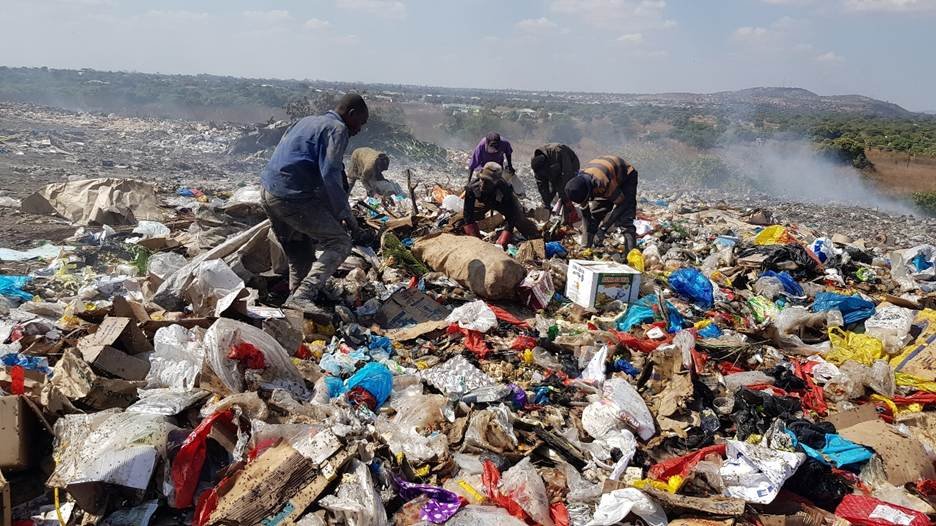
Image courtesy of UNDP / Lusaka
It’s tempting to call it a sanitation problem and leave it there. But that’s too easy, and honestly, too shallow. What we’re really looking at is a failure that runs through governance, urban planning, law enforcement, public education, and perhaps most uncomfortably, our own sense of civic duty as people.
Start with our habit of treating cleanliness as an event rather than a discipline. Every so often, a “Keep Zambia Clean” campaign launches with real fanfare. Leaders pick up brooms for the cameras. Communities turn out for a day, maybe two. The media covers it warmly. And then, almost on cue, it all fades, until the next election cycle gives someone a reason to revive it.
But you see, a clean country isn’t built through symbolism. It’s built through institutions that keep working long after the cameras have gone, budgets that don’t dry up, and habits that change slowly and stay changed.
Local authorities carry their share of the blame too. In too many councils around the country, waste collection simply isn’t reliable. Bins overflow for weeks at a time in some townships before anyone comes to empty them. And when people are faced with a mountain of garbage and no collection in sight, what do you expect them to do? They dump it in open spaces, along roadsides, and into the very drains that are supposed to carry away the rain.
That’s worth pausing on: this isn’t only a citizen behaviour problem. It’s a service delivery problem. When the system doesn’t show up, people improvise, and the improvising ends disastrously.
Then there’s the pace of our own growth working against us. Lusaka, Kitwe, Ndola, Livingstone, Chingola, Chipata, Kasama, Kafue, and Chongwe; these towns keep expanding, but the infrastructure meant to manage waste hasn’t kept up pace. New settlements go up without proper refuse collection points, without recycling facilities, without engineered landfills, and most of the time without decent drainage at all. Our urban planning is pathetic, to say the least!
Now, come rainy season, blocked drains flood the streets. Stagnant water becomes a nursery for mosquitoes in our communities. Piled-up waste raises the risk of cholera and typhoid, diseases we really shouldn’t still be fighting in this day and age. Every year, there is a cholera outbreak in this country.
There’s an economic cost hiding in all of this too, one we don’t talk about enough. Tourists don’t book flights to admire drifts of plastic bags along Cairo Road or Lusaka intercity bus terminus. Investors size up a city’s cleanliness the same way they size up its roads or its power supply as a signal of whether the institutions running the place actually work. A dirty city quietly tells the world that institutions have failed.
And then there’s the cultural piece, which might be the hardest to fix. Watch the roadside for a while, and you’ll see it: bottles, wrappers, plastics and packaging tossed out of moving cars and worse in public service vehicles without a second thought. This has become almost normal, because nobody stops it. Enforcement is rare, and the quiet social disapproval that once kept people in check has worn thin. Look at the stretch along the rail line from Misisi through Chawama and into Kamwala South; it’s essentially turned into an open dump site. As a city and a country, how did we let things get this bad, and more importantly, how do we fix it?
Walk down Cairo, Lumumba, or Freedom Way, and the CBD speaks for itself. The markets are overflowing, and our compounds are bearing the brunt of it. Right now, there is zero accountability when it comes to managing waste in these neighbourhoods, and the local council has pretty much left residents to fend for themselves.
To make matters worse, for example, in Lusaka, private waste management companies (of course managed through Lusaka Solid Waste Management) almost exclusively service middle- and upper-class areas where people can afford regular pickup fees. That leaves low-income communities completely stranded, forced to find their own ways to survive the build-up. The reality is simple: every single compound in Lusaka is suffering from severe environmental degradation, and we desperately need a system that works for the whole city, not just the neighbourhoods with disposable income.
But a clean country was never going to be built by government alone. Public space belongs to everyone, and civic responsibility starts small by refusing to litter, disposing of your own waste properly, and teaching your children to treat the environment with some respect.
Which brings us to schools, where environmental education has quietly fallen down the priority list. Waste separation, recycling, sanitation, and environmental stewardship – these shouldn’t be topics students read about once and forget. They should be things children actually practise, so the habit forms early and sticks. But right now, you find that even students, including those at universities, are the ones at the forefront of littering. Sometimes I question if indeed our students are practising what they are being taught or if they’re putting their knowledge to practical use in our communities.
Here’s an opportunity we keep leaving on the table: recycling. Elsewhere in the world, waste isn’t just waste anymore; it’s a resource. Plastic, glass, paper, organic material, and even electronics feed entire industries, creating jobs and cutting pollution at the same time. Zambia, by contrast, is still mostly a dumping economy rather than a recovering one. That’s not just an environmental gap. It’s a missed chance for entrepreneurship, for youth employment, and for building something closer to a circular economy.
Enforcement, too, has been half-hearted at best. We do have environmental regulations and local by-laws against littering and illegal dumping. What we don’t have is much follow-through, such that prosecutions are rare enough to be almost noteworthy. And rules that are hardly ever enforced eventually stop functioning as rules at all; people simply stop believing they apply. A practical example I can give is public smoking prohibition (passed through Prohibition of Smoking in Public Places Regulations, 2008 – Statutory Instrument No. 39 of 2008). Ever since Sylvia Masebo was transferred from the Local Government Ministry, enforcement completely fell off a cliff, and the law stopped being applied.
As a technology professional, I think technology is another door we’ve barely opened in the area of waste management. Smart bins, waste-tracking systems, GIS mapping to flag illegal dumping sites, mobile apps for reporting problems, and data-driven planning for sanitation services. These innovations aren’t futuristic ideas anymore. They’re standard tools elsewhere. There’s no good reason they shouldn’t be part of how we manage our own cities.
The private sector has a role here too, and it’s overdue for them to step into the game. The companies making and selling these products, such as manufacturers, supermarkets, and beverage brands, are the ones flooding our markets with packaging in the first place. It only makes sense that they carry a much bigger share of the responsibility for cleaning it up. Initiatives such as extended producer responsibility schemes, deposit-return systems for bottles (both plastic and glass), and real investment in recycling infrastructure should be strengthened. These aren’t radical ideas. They’re standard practice in plenty of other economies across Africa, and they tend to create sustainable business along the way.
At the end of it all, this was never really just about garbage. It is basically about how healthy our institutions are, how much respect we have for shared property, and how much discipline we’re willing to hold ourselves to as a country.
Believe me, we are not going to get a clean Zambia from slogans or the occasional clean-up weekend. We can only get it from local governments that actually function, environmental laws that are actually enforced, waste infrastructure built for modern cities, environmental education that sticks, citizens who show up, and political will that doesn’t run out after the ribbon-cutting.
We shouldn’t just measure our nation’s progress only in GDP growth or new roads and bridges that are being erected. Our progress should also show up clearly in the state of our streets, the health of our rivers, and whether our citizens feel any pride in the place we live.
We haven’t lost this war because it can’t be won. We’ve lost it because we keep treating it like an occasional campaign instead of a permanent responsibility.
If Zambia is serious about building cities that are healthy, modern, and genuinely competitive, cleanliness has to become part of who we are again, not a slogan we roll out every few years, but a commitment from government, business, communities, and every one of us, kept not for a day, but for generations.
The challenge of cleaning up Lusaka is now in the hands of our famous Mr Mwewa Chitambala, aka Mr Doba Apo. I hope and pray that his passion for a clean Lusaka will not die but will continue and restore the capital to match Kigali or Johannesburg. Mr Mwewa, take us to the glory days again!